Unattended death cleanup is the professional removal of biological fluids, pathogens, odors and contaminated materials left at a scene after someone has died alone and was not found for a period of time. Advanced Crime Scene Cleanup is a biohazard remediation company serving families, landlords and property managers who need safe, discreet restoration of a property after a death is discovered. This page explains exactly who handles each part of the process, what to do first, and how to get help around the clock.
What is unattended death cleanup?
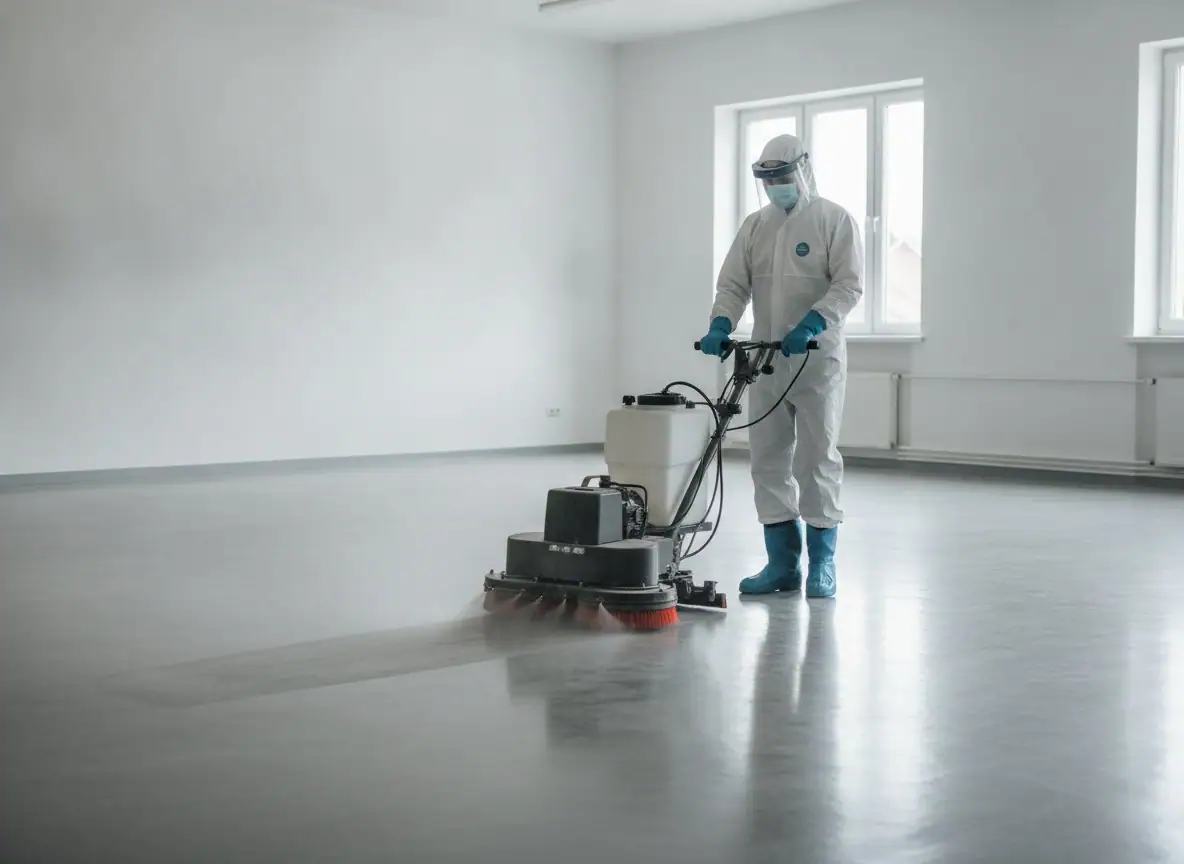
Unattended death cleanup is a specialized biohazard remediation service performed by trained technicians who remove human decomposition matter, disinfect affected surfaces and restore a property to a safe, habitable condition. When a person dies alone and is not discovered quickly, the body begins to decompose and releases biological fluids that can saturate flooring, migrate into subflooring, seep into wall cavities and produce persistent, penetrating odors. Standard janitorial services are not equipped — legally or technically — to handle this material.
Trained technicians use hospital-grade disinfectants, personal protective equipment (PPE) and regulated waste disposal procedures to address every contaminated surface. The work covers not only what is visible but also what has wicked into porous building materials below the surface. Understanding what qualifies as an unattended death shapes every decision that follows.
What constitutes an unattended death?
An unattended death is any death that occurs without witnesses and is not discovered immediately — typically hours, days or weeks later. Common circumstances include natural causes such as cardiac arrest, stroke or medical crisis; accidental drug or alcohol overdose; and deaths among elderly individuals living alone. The legal and cleanup implications are the same regardless of cause: the scene requires professional biohazard remediation once authorities have released the property.
The length of time between death and discovery is the single most important variable in remediation. Warm indoor temperatures accelerate decomposition significantly. A body undiscovered for 48 hours in a climate-controlled home produces far less structural damage than one undiscovered for two weeks in an unventilated space. Because decomposition progresses continuously, understanding whether the remains are a biohazard shapes the safety requirements for everyone who enters.
Free, no-obligation estimates
Talk to Advanced Crime Scene Cleanup
Tell us what you need and we’ll take it from there.
Is a dead body a biohazard?
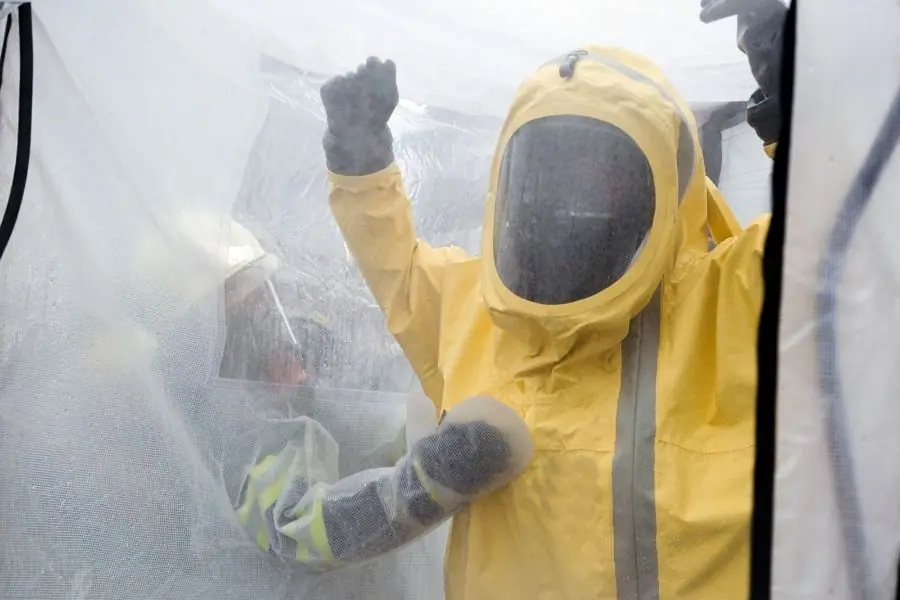
Yes — human remains and the fluids they release are classified as biohazardous material because they can carry bloodborne pathogens, bacteria and other infectious agents. Blood, decomposition fluid and tissue can transmit serious illnesses, including hepatitis B, hepatitis C and other pathogens, through skin contact or inhalation of contaminated particulates. This is why no untrained person should attempt to clean a decomposition scene.
Beyond direct contact risk, decomposition gases can compromise indoor air quality throughout a structure. All waste removed from the scene must be transported and disposed of under applicable state and federal regulations governing biohazardous material. The coroner or medical examiner handles the body itself — but the property cleanup is an entirely separate responsibility.
Does the coroner clean up after death?
No — the coroner or medical examiner removes the body and investigates the cause of death, but property cleanup is not part of their role. Law enforcement processes the scene for any investigative needs. Funeral homes transport and prepare remains for burial or cremation. None of these agencies clean biological material from floors, walls or furnishings.
Once authorities release the property back to the responsible party — typically a family member, estate representative, landlord or property manager — the cleanup obligation transfers entirely to that person. Knowing who is legally responsible for the cleanup determines the next immediate steps.
Who is responsible for cleaning up after a death?
The property owner or their designated representative is responsible for arranging and funding biohazard cleanup after an unattended death. For a privately owned home, that responsibility typically falls to the family or estate. For a rental property, the landlord or property management company bears the obligation, regardless of whether the deceased was a tenant. Hotels, motels and commercial properties carry the same owner responsibility.
Attempting to handle cleanup without proper training, PPE and licensed disposal puts everyone involved at legal and health risk. Many jurisdictions treat improper disposal of biohazardous material as a regulatory violation. Identifying the responsible party is step one — step two is knowing exactly what to do in the first minutes after discovery.
What should you do first after discovering an unattended death?
Call 911 immediately and do not touch or disturb anything at the scene. Follow this checklist in order:
- Call 911. Report the death and follow all instructions from the dispatcher. Do not move the body or clean anything.
- Leave the scene. Exit the immediate area and restrict access. Keep other household members, tenants and bystanders out.
- Wait for official release. Do not re-enter until law enforcement and the medical examiner have officially released the property to you.
- Ventilate carefully — if safe. Once released and if structurally safe to do so, opening windows can reduce odor buildup while you arrange professional cleanup. Do not use fans that could spread contaminated air through HVAC systems.
- Call a biohazard remediation company. Contact Advanced Crime Scene Cleanup or another qualified provider before anyone else enters to assess or clean. Request a free inspection and written quote.
- Notify your insurance carrier. Report the loss promptly; many homeowner and landlord policies cover biohazard remediation.
Once you have secured the scene and made those calls, the professional remediation process can begin as soon as the property is released.
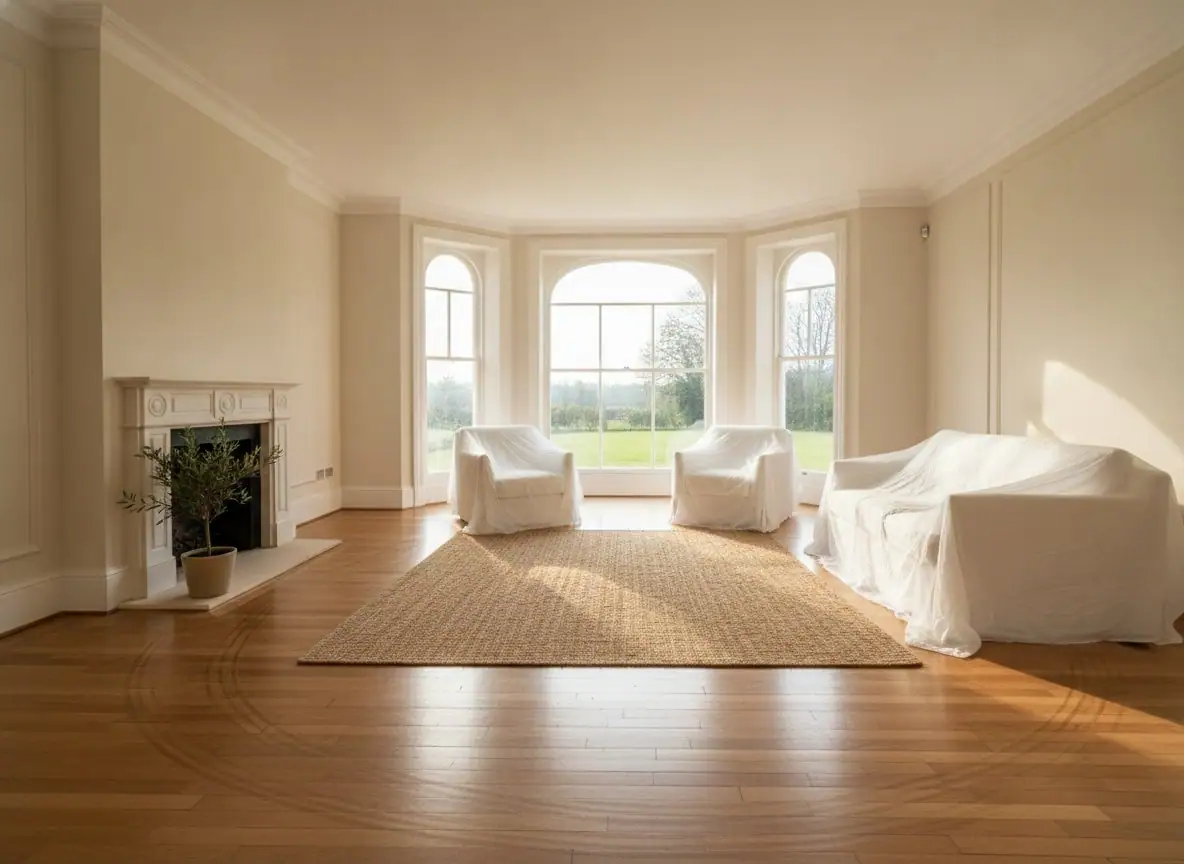
How does unattended death cleanup work?
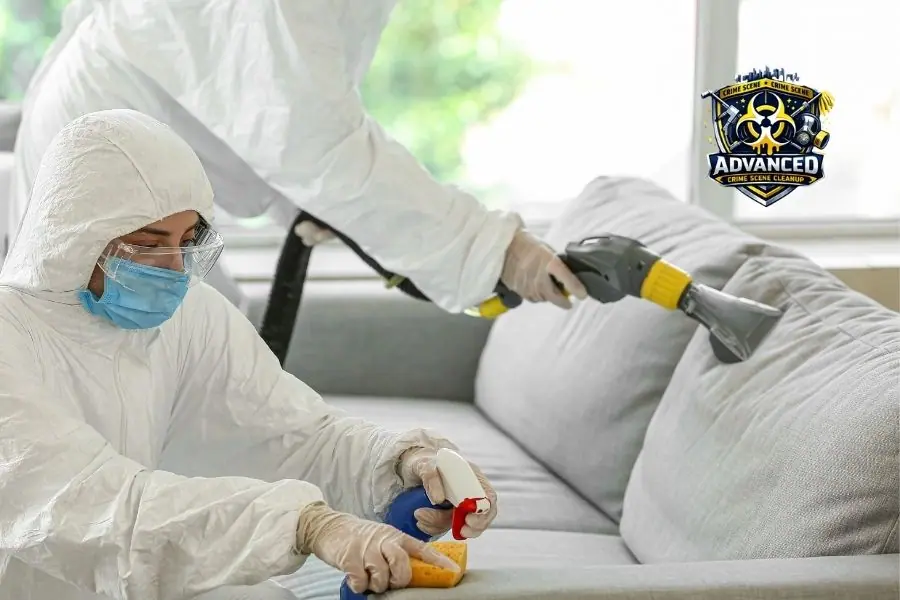
Professional unattended death cleanup follows a structured sequence designed to eliminate all biological hazards and restore the property to a safe condition. Advanced Crime Scene Cleanup uses trained technicians who complete each step in controlled order:
- Scene assessment. Technicians inspect all affected areas, including areas not immediately visible — subflooring, wall cavities, HVAC returns and crawl spaces — to determine the full extent of contamination before any work begins.
- Containment. Plastic sheeting and negative-air pressure barriers isolate the work zone, preventing cross-contamination of unaffected areas of the property.
- Removal of contaminated materials. Saturated carpet, padding, flooring, drywall and subflooring are removed and bagged in accordance with biohazardous waste regulations. This step is non-negotiable: fluids that have wicked into porous materials cannot be disinfected in place.
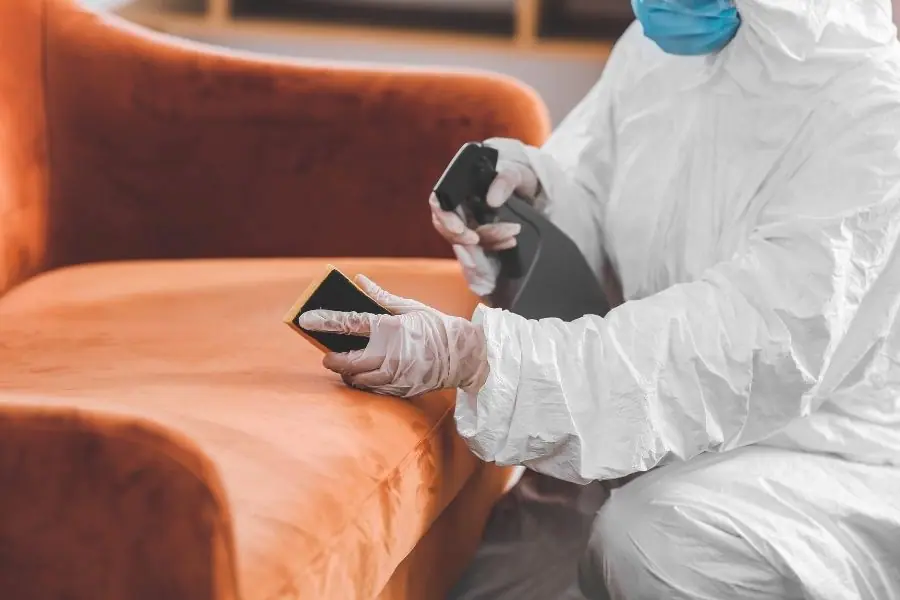
- Surface disinfection. All remaining structural surfaces are treated with hospital-grade disinfectants formulated to neutralize bloodborne pathogens and bacteria.
- Odor treatment. Air scrubbers equipped with HEPA filtration run continuously during and after remediation. Hydroxyl generators or ozone equipment neutralizes odor molecules at the molecular level rather than masking them. Severely affected cavities may require encapsulant application to seal residual odor sources in wood framing.
- Regulated waste disposal. All removed material is transported and disposed of under state and federal biohazardous waste regulations. Documentation is provided.
- Post-remediation verification. Technicians inspect and, where appropriate, test treated surfaces before releasing the work zone.
Read moreShow less
One detail many competitor descriptions omit: in cases where decomposition fluid has reached a concrete slab, the slab itself must be treated with an enzymatic digester before sealant is applied — standard disinfectant alone does not fully neutralize odor-causing organic matter locked in porous concrete. The total time the process takes depends on what is found during assessment.
How long does unattended death cleanup take?
Most residential unattended death cleanups are completed within one to three days, though complex cases involving extended decomposition or significant structural penetration can require longer. A single-room scene with minimal structural impact may be completed in several hours. A scene where fluids have spread across multiple rooms, soaked through multiple flooring layers or migrated under a slab requires sequential work — removal, drying, disinfection and odor treatment cannot all happen simultaneously.
Time estimates are only reliable after an in-person assessment, because visual inspection alone does not reveal how deeply fluids have penetrated. The scope of that damage directly determines the cost of remediation.
At a glance
How much is biohazard cleanup after death?
The cost of unattended death cleanup varies widely based on a set of measurable factors. Advanced Crime Scene Cleanup provides a written quote after a free on-site inspection — no cost estimate is reliable without seeing the scene. The table below explains what drives the price:
| Cost Factor | Why It Affects Price |
|---|---|
| Time since death | Longer decomposition = greater fluid volume and deeper structural penetration, requiring more material removal and treatment time. |
| Ambient temperature | Higher temperatures accelerate decomposition. A warm, unventilated room produces faster and more extensive contamination than a cool space. |
| Affected square footage | Larger contamination areas require more labor hours, supplies and regulated waste disposal capacity. |
| Flooring and subfloor type | Carpet and padding absorb and hold fluid; hardwood, laminate and concrete require different treatments. Multi-layer penetration adds removal steps. |
| Wall and ceiling involvement | Fluid or odor migration into drywall or framing requires demolition and reconstruction beyond remediation scope. |
| HVAC contamination | Odor or particulates drawn into ductwork require duct cleaning and treatment as a separate scope item. |
| Personal property removal | Contaminated furnishings, clothing and belongings must be bagged and disposed of under biohazardous waste rules, adding disposal volume and labor. |
| Access and site conditions | Upper-floor apartments, hoarder environments or properties with limited access increase labor time. |
Many homeowner and landlord insurance policies cover a significant portion of biohazard remediation costs — which makes the next question critical to ask before paying out of pocket.
Does insurance cover unattended death cleanup?
Many homeowner, renter and landlord insurance policies do cover biohazard remediation after an unattended death, though coverage terms vary by policy and carrier. Some policies list it under "additional coverage" for contamination or pollution; others require a specific rider. Filing the claim promptly — before work begins — protects your ability to document scope and costs.
Even when insurance covers remediation, choosing the right company to do the work is a separate and equally important decision.
How do you choose an unattended death cleanup company?
Choose a company that is insured and bonded, responds 24 hours a day, provides a written scope of work before starting, and disposes of biohazardous waste under proper regulatory documentation. Specific questions to ask any provider:
- Are you insured and bonded for biohazard remediation work?
- Do you provide a written, itemized quote before work begins?
- How do you document and dispose of biohazardous waste — will I receive disposal paperwork?
- Can you work with my insurance carrier directly?
- Do you offer discreet, unmarked service vehicles?
- Are your technicians trained in bloodborne pathogen handling and confined-space safety?
Avoid any company that provides a price over the phone without an inspection, or that cannot provide evidence of insurance and waste disposal documentation. Advanced Crime Scene Cleanup is insured and bonded, provides free inspections with written quotes, and operates with fully discreet service to protect your privacy and that of your neighbors.
Call us 24/7 for discreet help
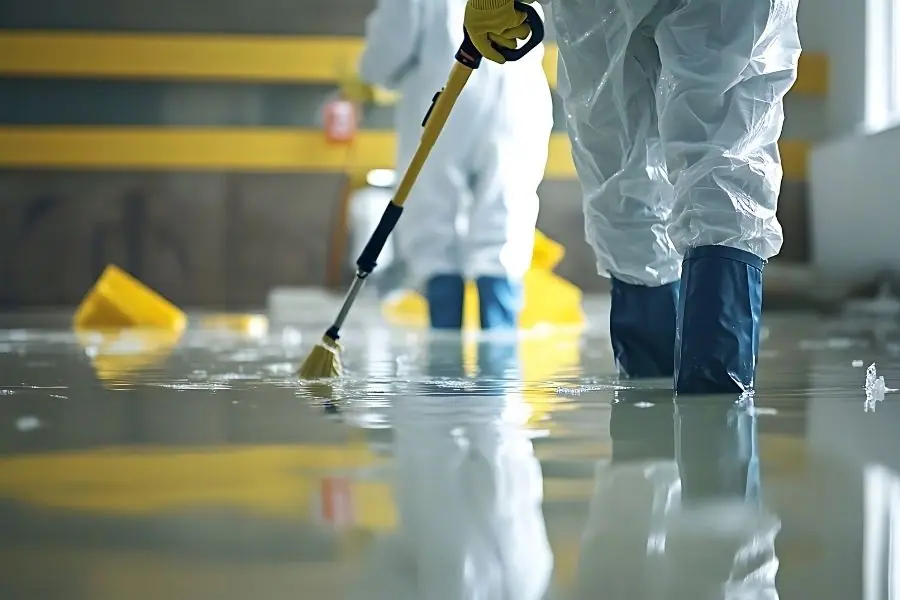
Advanced Crime Scene Cleanup is a biohazard remediation company available 24 hours a day, 7 days a week, including holidays. We serve families, landlords and property managers who need fast, discreet and thorough unattended death cleanup. Our trained technicians respond to calls any time — because discoveries rarely happen during business hours, and waiting increases structural damage and health risk.
Call +1 (817) 402-8125 now for a free inspection and written quote. We will walk you through every step, assist with your insurance claim and restore the property with complete discretion.
FAQ
FAQ
Will odors go away after cleanup?
Yes — when remediation is performed correctly, odors are permanently eliminated rather than masked. HEPA air scrubbers remove particulates from the air during remediation. Hydroxyl generators or ozone equipment neutralizes odor-causing molecules at the molecular level. For odors that have penetrated wood framing or concrete, encapsulant sealants lock residual sources into the substrate. Odors that persist after a cleanup typically indicate that contaminated material was not fully removed or that porous surfaces were not properly treated.
Can the property be restored after decomposition?
In most cases, yes. Surfaces that have absorbed biological fluids — carpet, drywall, subflooring — are removed and replaced, and structural elements such as framing and concrete are treated and sealed. Properties where decomposition was discovered early typically require less structural work. Properties with extended decomposition may require more significant repairs, but restoration is achievable in the large majority of cases once biohazard remediation is complete.
What happens to personal belongings?
Belongings that are biologically contaminated must be bagged and disposed of under regulated biohazardous waste procedures. Items that are uncontaminated and can be safely handled are set aside and can be returned to the family or estate. Technicians inventory removed items during the cleanup process. If you have questions about specific items before work begins, raise them during the free inspection so the team can plan accordingly.
Do you help landlords with tenant deaths?
Yes. Landlords and property management companies are among the clients we serve most frequently. We understand the dual pressure of regulatory compliance and tenant privacy. We provide all documentation needed for insurance claims, work discreetly to avoid drawing attention at the property, and can coordinate directly with property management staff or adjusters. Financing is available for remediation costs not covered by a landlord policy.
Is cleanup discreet?
Yes. Advanced Crime Scene Cleanup operates with full discretion. We use unmarked vehicles, work in contained areas and do not discuss scene details with anyone other than the authorized responsible party. This protects the dignity of the deceased and the privacy of families and neighbors.
How much does a biohazard cleanup person make?
This varies by employer, region, experience level and the type of work performed, and falls outside the scope of what we can accurately quote. The U.S. Bureau of Labor Statistics publishes wage data for hazardous materials removal workers that provides a reliable public reference point if you are researching this question.
Why choose us
Why choose Advanced Crime Scene Cleanup?
Free estimates
Get a clear, no-obligation estimate before any work begins.
Licensed & insured
Your property and our crew are protected on every project.
Residential & commercial
One team for homes, multi-family and commercial properties.
Locally owned & operated
A local team serving your community and the surrounding area.
Get in touch
Find crime scene cleanup help near you
Request a free estimate online or give us a call — our team will follow up quickly.
- Call us+1 (817) 402 81-25
- Hours24h