Professional Blood Cleanup
Blood cleanup is the safe removal, disinfection, and disposal of blood and the materials it has touched, and it matters because blood can carry infections long after it looks dry. Advanced Crime Scene Cleanup provides 24/7 emergency blood cleanup for homes, businesses, and vehicles across the United States, with a free inspection before any work begins.
This page explains when a small spill is reasonable to handle yourself, which products actually disinfect, and how the work is done when blood has soaked into floors, walls, or upholstery. It also covers how professionals approach dried blood and what to expect for timing, cost, and insurance.
What is professional blood cleanup?
Professional blood cleanup is a controlled process in which trained technicians contain, remove, disinfect, and legally dispose of blood and blood-contaminated materials so a space is safe to use again. It goes further than wiping a visible stain. Blood flows into seams, grout, carpet padding, drywall gaps, and subflooring, and it can spread through shoes, mops, and air movement during a careless cleanup.
A professional crew treats the area as a contaminated zone. Technicians wear protective equipment, set up barriers, use disinfectants rated for bloodborne pathogens, remove materials that cannot be saved, and package waste as regulated medical waste. Blood cleanup is often part of a larger job, such as unattended death cleanup, suicide cleanup services, or assault and trauma scenes, but it is also requested after workplace injuries, accidents at home, and incidents in vehicles. The reason for all of this care comes down to what blood can carry.
Why is blood a biohazard?
Blood is a biohazard because it can contain bloodborne pathogens such as hepatitis B, hepatitis C, and HIV, which can infect anyone who contacts it through cuts, mucous membranes, or contaminated objects. You usually cannot tell whether the blood is infectious, so it must be treated as if it is.
- Hepatitis B can survive on dry surfaces at room temperature for at least seven days, according to the CDC, so dried blood is not automatically safe.
- Hepatitis C can also remain infectious on surfaces for an extended period.
- Bacteria grow in blood that sits in warm, porous materials, leading to odor and secondary contamination.
- Exposure routes include broken skin, splashes to the eyes, nose, or mouth, and punctures from sharp debris such as broken glass.
Because of these risks, federal workplace rules set a baseline for how blood must be handled.
Free, no-obligation estimates
Talk to Advanced Crime Scene Cleanup
Tell us what you need and we’ll take it from there.
What are the Osha blood cleanup procedures?
OSHA blood cleanup procedures come from the Bloodborne Pathogens Standard (29 CFR 1910.1030), which requires employers to protect workers who may contact blood through universal precautions, protective equipment, proper disinfection, and regulated waste handling. The standard applies to workplaces, but its principles are the best guide for any blood spill.
- Universal precautions: Treat all blood as infectious.
- Exposure control plan: Employers must have a written plan identifying who may be exposed and how.
- Personal protective equipment: Gloves, eye protection, face protection, and fluid-resistant clothing appropriate to the task.
- Engineering and work practice controls: Use tools such as tongs or a dustpan for broken glass instead of hands, and avoid splashing or spraying.
- Decontamination: Clean and disinfect surfaces with an appropriate disinfectant as soon as feasible after contamination.
- Regulated waste: Place saturated materials in labeled, leak-resistant biohazard containers and dispose of them according to state rules.
- Training and vaccination: Workers at risk must be trained and offered the hepatitis B vaccine.
Within these procedures, the choice of cleaning product is one of the most common questions people have.
What is the best thing to clean up blood?
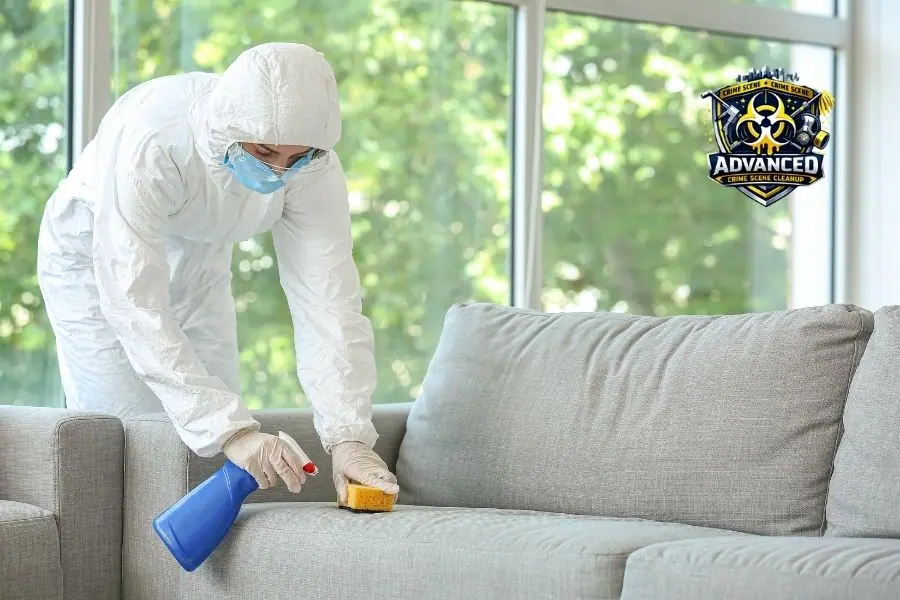
The best approach to clean up blood is a two-step process: first remove the blood with absorbent materials and a detergent or enzyme cleaner, then disinfect with an EPA-registered disinfectant labeled for bloodborne pathogens. Disinfectants work poorly on surfaces still covered in organic material, so cleaning must come before disinfecting.
- Absorbents: Disposable towels or solidifying powder for liquid blood.
- Cold water: Use cold, not hot, water on fabrics. Heat sets blood proteins into fibers.
- Enzyme cleaners: Break down proteins in fabric and carpet, useful for stain removal but not a substitute for disinfection.
- Disinfectant: Applied after cleaning and left wet for the full contact time on the label.
Which disinfectant to use depends on the surface and the size of the spill.
At a glance
What chemical cleans up blood?
The chemicals that reliably disinfect blood are diluted household bleach (sodium hypochlorite) and EPA-registered disinfectants that list HIV and hepatitis B, or that are tuberculocidal, on the label. The CDC has recommended a 1:10 bleach dilution for larger spills with heavy organic material, with a 1:100 dilution acceptable for smaller cleaned surfaces.
| Product type | Best use | Limitations |
|---|---|---|
| Household bleach, diluted fresh | Hard, nonporous surfaces after cleaning | Damages fabrics and some finishes, weakens after mixing, toxic fumes if mixed with ammonia or acids |
| Household multi-purpose sprays | Light cleaning | Many are not labeled for bloodborne pathogens and do not disinfect blood reliably |
| Professional-grade EPA-registered hospital disinfectants | Hard and some soft surfaces, larger areas | Require correct dilution, contact time, and PPE |
| Accelerated hydrogen peroxide disinfectants | Broad surface use with shorter contact times | Professional-strength concentrates need proper handling |
| Enzyme cleaners | Breaking down protein stains in fabrics | Clean but do not disinfect on their own |
The difference between household and professional-grade products is mostly about verified kill claims, contact time, and how well a product works through organic soil. Many people reach for one familiar product in particular, especially for old stains.
Does hydrogen peroxide clean dried blood?
Hydrogen peroxide can lighten and lift small dried blood stains, but the 3% drugstore version is not a dependable way to clean up dried blood that has soaked into porous materials. It foams on contact with blood, which helps loosen fresh or light stains on colorfast fabric and hard surfaces.
- It works slowly on thick or old stains and may need repeated applications.
- It can bleach carpet, upholstery, and clothing.
- It does not reach blood that has wicked into padding, subflooring, or wall cavities.
- A stain that disappears is not proof the surface is disinfected.
Safety warning for DIY cleanup: Do not attempt to clean blood yourself if the spill is larger than a few inches, has soaked into carpet or furniture, involves broken glass or sharp objects, came from a person whose health status you do not know, or is part of a death or violent incident. Never mix bleach with ammonia, vinegar, or other cleaners. If blood contacts broken skin, eyes, or mouth, wash immediately and contact a medical provider. When the job goes beyond a small surface spot, professionals follow a structured process.
How do professionals clean up blood?
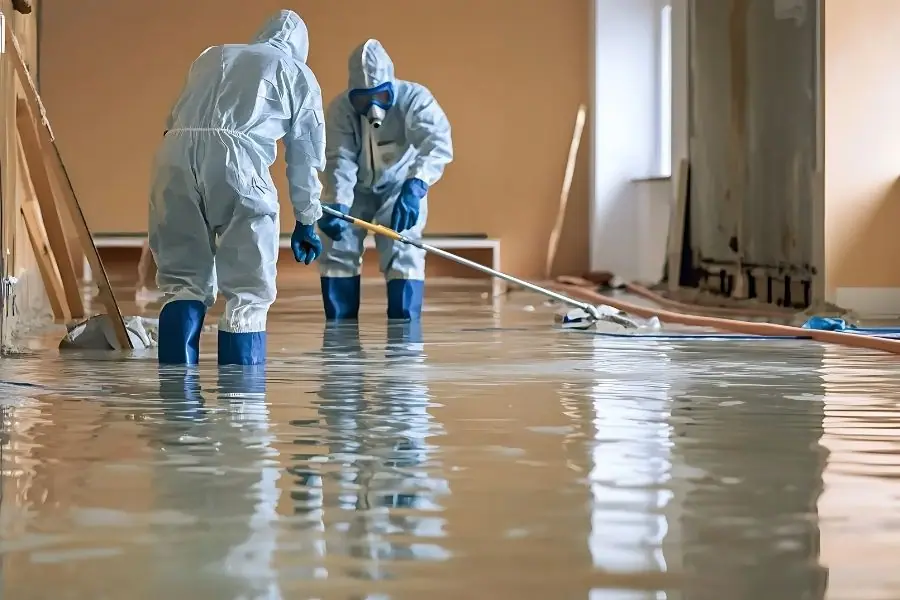
Professionals clean up blood by assessing the full extent of contamination, containing the area, removing affected materials, disinfecting everything that remains, and disposing of waste as regulated biohazard material. Here is the process our technicians follow:
- Free inspection and assessment: We identify visible and hidden contamination, including what has soaked below the surface.
- Containment: The area is sectioned off to keep contamination from spreading to other rooms.
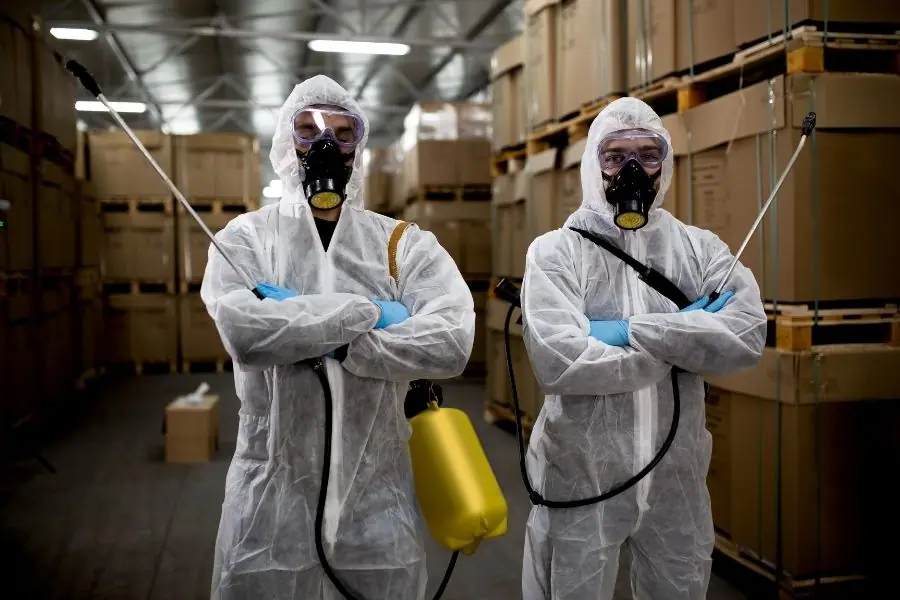
- Protective equipment: Technicians wear gloves, eye and face protection, respirators as needed, and disposable suits.
- Bulk removal: Liquid and solid material is absorbed and collected.
- Removal of unsalvageable materials: Saturated carpet, padding, drywall, or upholstery is cut out and bagged.
- Cleaning: Remaining surfaces are cleaned with detergents and enzyme products to remove organic residue.
- Disinfection: Professional-grade disinfectants are applied at the correct dilution and contact time.
- Odor treatment: Lingering odors are addressed when needed.
- Waste disposal: Biohazard waste is packaged, labeled, and transported for proper disposal.
- Final walkthrough: We review the work with you before leaving.
As a biohazard cleanup company, we apply the same process to bodily fluids beyond blood. How long these steps take depends on what the inspection finds.
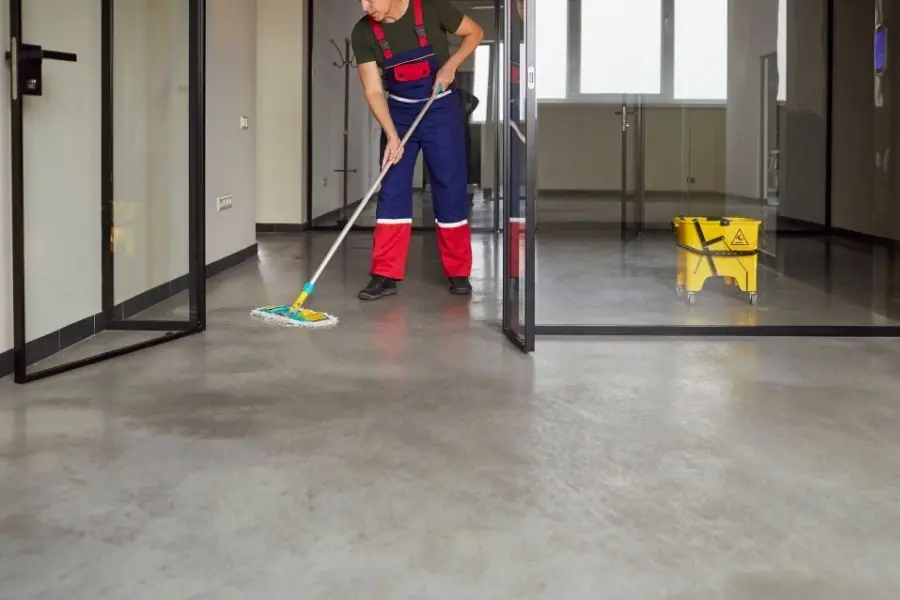
How long does blood cleanup take?
Blood cleanup can take a few hours for a contained spill on hard surfaces or one to several days when blood has soaked into structural materials. The main factors that affect timing are:
- Size and spread: One room versus several rooms or a stairwell.
- Surface type: Tile and sealed concrete clean faster than carpet, wood, and drywall.
- Time since the incident: Dried blood and decomposition add steps.
- Material removal: Cutting out flooring or wall sections takes longer than surface cleaning.
- Odor treatment: Deodorization can extend the job.
We explain the expected timeline after the inspection. These same factors also determine the price.
At a glance
How much does it cost to clean up blood?
The cost to clean up blood depends on how much area is affected, what materials are involved, and how much must be removed, so we provide a written quote after a free inspection rather than a flat price. For more detail, see our page on biohazard cleanup cost and insurance.
| Cost factor | Why it affects price |
|---|---|
| Size of the affected area | Larger areas need more labor, supplies, and disinfectant |
| Surface and material type | Porous materials like carpet and drywall often require removal instead of cleaning |
| Depth of penetration | Blood in padding, subflooring, or wall cavities requires tear-out |
| Access | Tight spaces, vehicles, upper floors, and stairs slow the work |
| Time since the incident | Dried blood, bacterial growth, and odor add steps |
| Waste volume | More removed material means more regulated biohazard disposal |
| Odor treatment | Deodorization adds equipment and time |
Many people pay less out of pocket than they expect once insurance is considered.
Does insurance cover blood cleanup?
Insurance often covers blood cleanup under homeowners, renters, commercial property, or auto policies, depending on the policy terms and the cause of the incident. Coverage is decided by your insurer, so it is worth checking before assuming you will pay the full cost.
Insurance and financing: Advanced Crime Scene Cleanup helps homeowners with insurance claims, including documentation of the contamination and the work performed. Financing is available for costs that are not covered. Ask about both during your free inspection.
With cost and coverage understood, the next decision is choosing who will do the work.
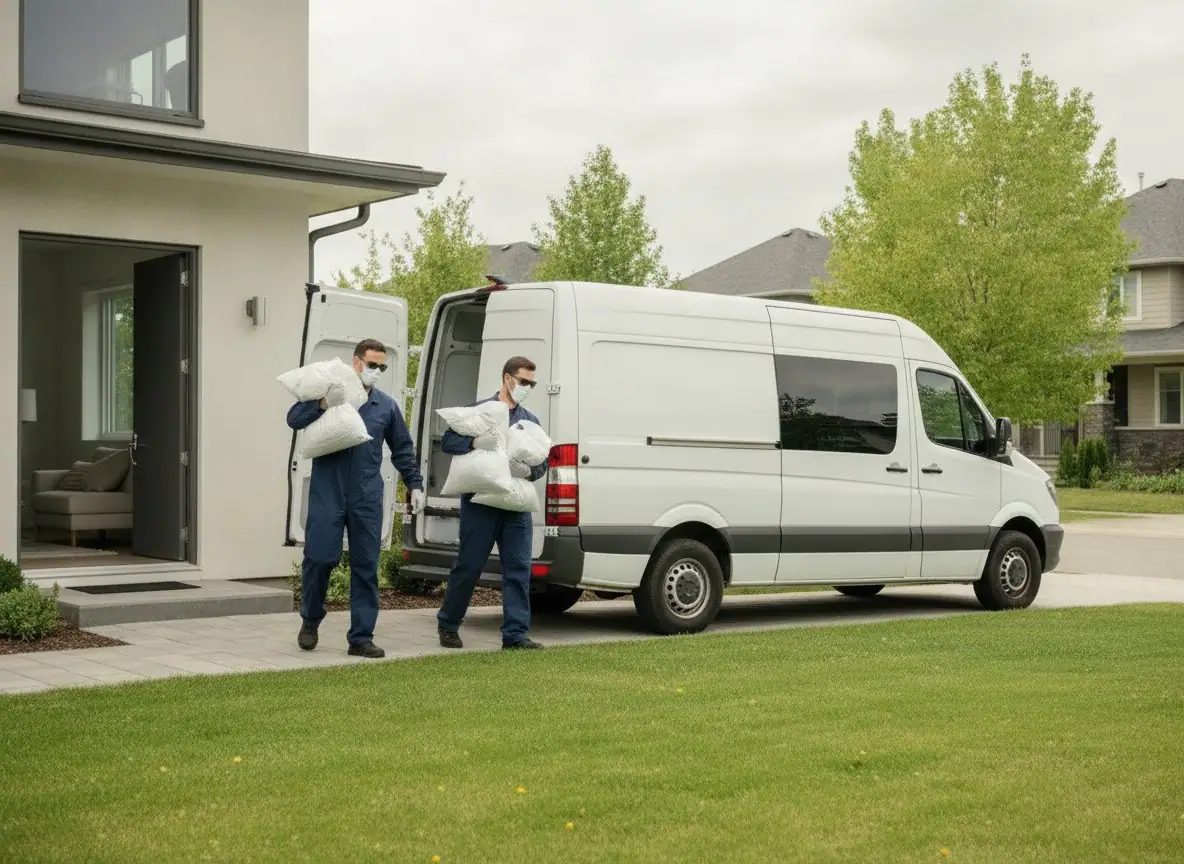
How do you choose a blood cleanup company?
Choose a blood cleanup company that follows OSHA bloodborne pathogen practices, disposes of waste legally, explains its process in writing, and can respond when you need it. Questions to ask:
- Do you follow OSHA Bloodborne Pathogens Standard practices and use EPA-registered disinfectants?
- How do you dispose of biohazard waste?
- Will you inspect for hidden contamination under flooring and inside walls?
- Do you provide a written quote before starting?
- Are you insured, and do you help with insurance claims?
- Do you answer calls 24/7?
Advanced Crime Scene Cleanup is insured, answers calls 24/7, offers free inspections, and helps with insurance claims. You can learn more on our about us page or browse all services. When you are ready, the next step is a phone call.
Call 24/7 for emergency blood cleanup
Call +1 (817) 402 81-25 any time, day or night, for emergency blood cleanup. We will talk through what happened, arrange a free inspection, and give you a written quote before work begins. Our 24/7 crime scene cleanup team handles blood in homes, businesses, rental properties, and vehicles across the United States, and we work discreetly.
FAQ
Frequently asked questions
Can I clean a small blood spill myself?
Yes, a small spill on a hard, nonporous surface, such as a few drops from a minor cut, can usually be handled with disposable gloves, paper towels, and an EPA-registered disinfectant or freshly diluted bleach left wet for the label contact time. Call a professional if blood has soaked into fabric or flooring, covers a larger area, or came from an unknown source.
Does blood soak into carpet and subflooring?
Yes. Blood passes through carpet fibers into the padding and can reach the subfloor, where it stays hidden and causes odor and contamination. Saturated padding is usually removed, and the subfloor is cleaned, disinfected, and sometimes sealed or replaced.
What PPE is needed for blood cleanup?
At minimum, disposable nitrile gloves and eye protection. Larger cleanups call for double gloves, a face shield or goggles, a fluid-resistant suit, shoe covers, and respiratory protection when aerosols or strong chemicals are involved.
How is blood waste disposed of?
Blood-saturated materials are placed in labeled, leak-resistant red biohazard bags or containers and handled as regulated medical waste under state rules. They should not go into household trash.
Do you clean blood from vehicles?
Yes. Vehicle biohazard cleanup is one of our services. Blood in a vehicle often reaches seat foam, carpet backing, and seat belts, which require removal or deep treatment.
Is blood cleanup discreet?
Yes. We understand these situations are private and stressful, and we work to keep the cleanup low-profile for families, property owners, and businesses.
Call +1 (817) 402 81-25 to schedule a free inspection with Advanced Crime Scene Cleanup.
Why choose us
Why choose Advanced Crime Scene Cleanup?
Free estimates
Get a clear, no-obligation estimate before any work begins.
Licensed & insured
Your property and our crew are protected on every project.
Residential & commercial
One team for homes, multi-family and commercial properties.
Locally owned & operated
A local team serving your community and the surrounding area.
Get in touch
Find crime scene cleanup help near you
Request a free estimate online or give us a call — our team will follow up quickly.
- Call us+1 (817) 402 81-25
- Hours24h