Biohazard cleanup is the professional removal, disinfection, and disposal of biological materials that pose a direct health risk to anyone who contacts them. Advanced Crime Scene Cleanup provides 24/7 biohazard cleanup response for residential and commercial properties, handling every situation from unattended deaths to industrial chemical spills with trained technicians and regulated waste disposal.
What is a biohazard clean up?
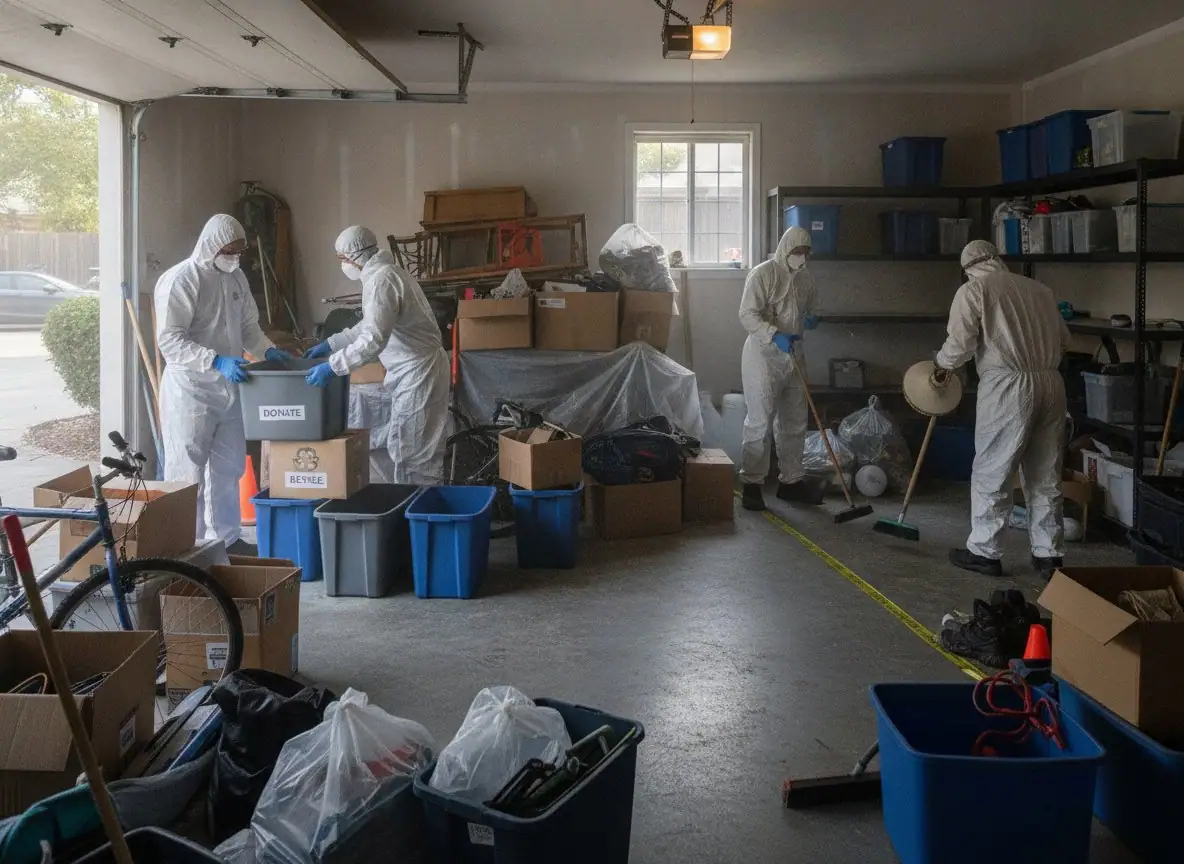
Biohazard cleanup is the structured process of removing, decontaminating, and disposing of biological or chemical materials that exceed safe handling by untrained individuals. Blood, bodily fluids, human tissue, sewage, and certain drug residues all qualify as biohazardous because they can carry pathogens capable of causing serious illness or death. The process goes far beyond surface cleaning: technicians must assess penetration depth into porous materials, neutralize pathogens at a microbial level, and package waste for transport to a licensed disposal facility under applicable regulations. Standard household cleaning products do not achieve the pathogen-kill levels required, and they provide no protection against aerosolized contaminants. Understanding the full scope of what biohazard cleanup involves makes it clear why the conditions that require it matter just as much as the cleanup itself.
When do you need professional biohazard cleanup?
Professional biohazard cleanup is needed any time biological or chemical contamination cannot be safely contained and eliminated with ordinary cleaning supplies and no personal protective equipment. Specific situations include the discovery of an unattended death, a traumatic injury involving significant blood loss, an assault or homicide, a suicide, a confirmed infectious disease exposure, a drug lab or fentanyl contamination, a chemical spill, or a vehicle accident with bodily fluids present. A practical decision rule: if you cannot identify the full extent of contamination, cannot verify pathogen elimination with a test, and do not have access to regulated disposal, the scene requires a professional biohazard cleanup company. Attempting to handle these conditions yourself creates secondary exposure risks for you, your family, and anyone who enters the space afterward. The specific type of scene determines which equipment, chemical agents, and disposal protocols apply, which leads directly to the range of scenes we address.
Free, no-obligation estimates
Talk to Advanced Crime Scene Cleanup
Tell us what you need and we’ll take it from there.
At a glance
What types of biohazard scenes do we clean?
We respond to a wide range of biohazard scenes across residential, commercial, and institutional settings. The table below identifies each scene type and the primary hazard it presents.
| Scene Type | Primary Biohazard | Common Setting |
|---|---|---|
| Unattended Death / Decomposition Cleanup | Decomposition fluids, airborne pathogens, odor compounds | Residence, hotel, rental unit |
| Homicide Scene Cleanup | Blood, tissue, bloodborne pathogens | Residence, vehicle, commercial property |
| Suicide Cleanup | Blood, bodily fluids, potential structural penetration | Residence, vehicle, public space |
| Trauma Scene Cleanup | Blood, bodily fluids | Residence, workplace, vehicle |
| Assault Scene Cleanup | Blood, bodily fluids | Residence, commercial property |
| Blood Cleanup / Bodily Fluid Cleanup | Bloodborne pathogens, biohazardous waste | Any setting |
| Infectious Disease Decontamination | Viral and bacterial pathogens | Residence, healthcare, commercial |
| Meth Lab / Clandestine Drug Lab Cleanup | Toxic chemical residues | Residence, motel, vehicle |
| Fentanyl Decontamination | Synthetic opioid residue, dermal absorption risk | Residence, vehicle, commercial |
| Chemical Spill Cleanup | Corrosive or toxic industrial chemicals | Industrial site, warehouse |
| Industrial Accident Cleanup | Blood, chemical, or combined hazards | Workplace, industrial facility |
| Vehicle Biohazard Cleanup | Blood, bodily fluids, drug residue | Personal or commercial vehicle |
| Jail & Prison Cell Decontamination | Bodily fluids, infectious pathogens | Correctional facility |
| Hotel & Motel Trauma Cleanup / Tenant Death Cleanup | Decomposition, blood, bodily fluids | Hotel, rental property |
| Tear Gas Cleanup / Fingerprint Dust Cleanup | Chemical irritants, fine particulate residue | Post-law-enforcement scene |
| Odor Removal / Decomposition Odor Removal / Smoke Odor Removal | Volatile organic compounds, embedded odor molecules | Any affected structure |
Each scene type carries a distinct pathogen profile, and understanding those pathogens — particularly the ones carried in blood and bodily fluids — is central to why the cleanup process must follow regulated procedures.
What is bloodborne pathogen clean up?
Bloodborne pathogen cleanup is the controlled removal and disinfection of blood and bodily fluids that may carry viruses or bacteria transmissible through direct contact, mucous membrane exposure, or puncture injury. The pathogens of primary concern include hepatitis B, hepatitis C, and HIV, all of which can remain viable in dried blood for varying periods outside a host. Our trained technicians follow bloodborne pathogen exposure-control procedures that include full personal protective equipment: fluid-resistant coveralls, gloves rated for biohazard contact, respiratory protection appropriate to the scene, and eye protection. Blood and fluid-saturated materials are placed in sealed, labeled biohazard bags and rigid sharps containers where applicable. All regulated biological waste is then transported to a licensed medical waste disposal facility — it cannot go into standard municipal waste streams. One detail many property owners do not realize: bloodborne pathogens can saturate through carpet, into subfloor materials, and even into concrete if volume and time allow. Testing after remediation confirms whether contamination has been fully cleared before the space is returned to use. This thoroughness in regulated disposal and material assessment is what separates professional blood borne pathogen clean up from an ordinary surface wipe-down, and it also sets the structure for the step-by-step process we follow on every job.
How does biohazard cleanup work?
Every biohazard cleanup follows a defined sequence designed to protect technicians, eliminate contamination, and restore the property to a safe and habitable condition.
- Scene assessment: Technicians identify the type and extent of contamination, including hidden penetration into porous materials. This step determines which PPE level, chemical agents, and disposal protocols are required before anyone begins work.
- Containment: The affected area is isolated using physical barriers and negative air pressure where airborne contaminants are present. This prevents cross-contamination to unaffected parts of the structure.
- Removal of biohazardous material: Saturated porous materials — carpet, padding, drywall, insulation, subflooring — that cannot be decontaminated to a verifiable standard are removed and placed in sealed biohazard containers. Non-porous surfaces are cleaned to visible clarity first.
- Application of EPA-registered disinfectants: Hospital-grade, EPA-registered disinfectants with demonstrated kill claims against bloodborne pathogens are applied to all affected surfaces at proper dwell times. This is not a quick spray; dwell time is the period the disinfectant must remain wet on a surface to achieve its rated kill level.
- Odor treatment: Volatile organic compounds from decomposition or chemical exposure are addressed using appropriate deodorization technology targeting the source, not masking it.
- Post-remediation verification: The treated area is inspected and tested where needed to confirm contamination has been eliminated before containment is removed.
- Regulated waste transport and disposal: All biohazardous waste leaves the property in sealed, labeled containers and is transported to a licensed disposal facility in compliance with applicable waste transport regulations.
How long each of these steps takes depends heavily on the nature and scale of the scene, which is the next practical question most property owners have.
How long does biohazard cleanup take?
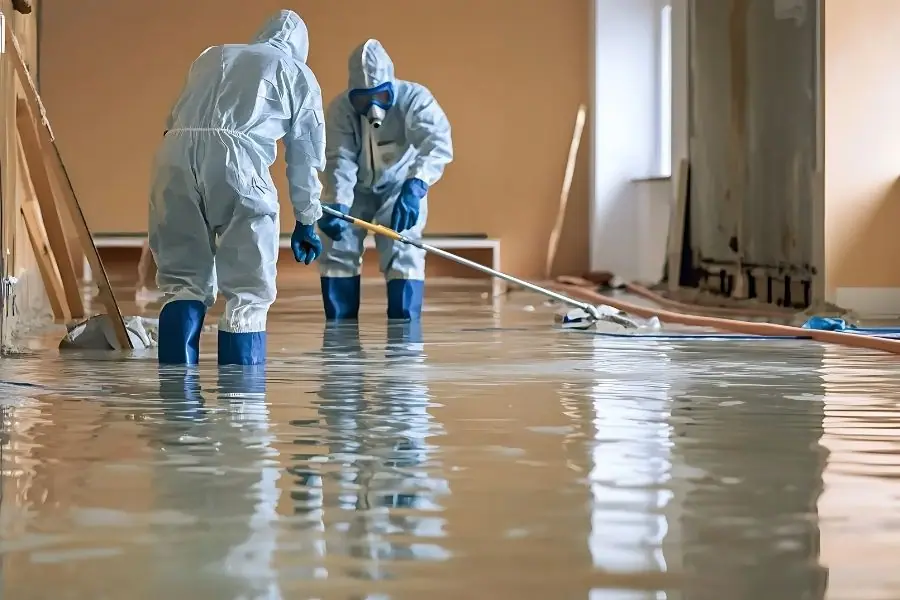
A contained single-room blood cleanup with no structural penetration typically takes a few hours. A decomposition scene, as in unattended death cleanup, can require one to several days when fluids have saturated subfloor materials or migrated to adjacent rooms, including time for material removal, treatment, drying, and verification. Vehicle biohazard cleanups are generally completed in a single session. Industrial or chemical spill scenes vary based on the chemical involved, the volume released, and site access conditions. We provide a time estimate during the free inspection once the full scope of contamination is assessed. The timeline affects cost directly, so understanding what drives the price is the logical next step.
At a glance
How much does it cost to have a crime scene clean up?
Biohazard and crime scene cleanup cost is determined by several site-specific variables, not a flat rate. The table below identifies the main cost factors.
| Cost Factor | Why It Affects Price |
|---|---|
| Contamination size and volume | Larger or deeper contamination requires more labor hours, more chemical product, and more regulated waste disposal capacity. |
| Material type (porous vs. non-porous) | Porous materials (carpet, drywall, wood) often require removal and disposal rather than surface treatment alone, adding material and labor cost. |
| Extent of structural penetration | Fluids that have migrated into subfloor, wall cavities, or concrete require additional testing and may require structural material replacement. |
| Scene type and pathogen class | Chemical or drug lab scenes require specialized PPE and neutralizing agents beyond standard biohazard protocols. |
| Access and site conditions | Confined spaces, upper floors without elevator access, or cluttered environments increase labor time. |
| Time elapsed since incident | Extended decomposition or delayed discovery increases contamination depth and odor complexity, raising remediation scope. |
| Regulated waste volume | Disposal fees are proportional to the volume and class of biohazardous waste transported to a licensed facility. |
| Required permits or notifications | Certain chemical or drug lab cleanups require notifications to local authorities or environmental agencies, which adds administrative steps. |
We provide a written quote after a free on-site inspection — no estimate is given over the phone without seeing the scene, because an unseen scene cannot be accurately scoped. Insurance coverage can significantly reduce or eliminate out-of-pocket cost, which is worth understanding before you assume you are paying entirely on your own.
Does insurance cover biohazard cleanup?
Many homeowner and commercial property insurance policies cover biohazard cleanup under trauma, crime, or contamination provisions, though coverage terms vary by policy and carrier. We work directly with insurance companies on behalf of property owners and help document the claim with the records insurers typically require: scope of work, affected materials, disposal manifests, and before-and-after documentation. We recommend calling your carrier promptly after an incident, as delay in notification can complicate claims. If insurance coverage is limited, partial, or unavailable, financing options are available so cost does not prevent you from addressing a health hazard safely. Knowing how coverage and financing work can influence which biohazard cleanup company you choose to call.
How do you choose a biohazard cleanup company?
The most important factors when selecting a biohazard cleanup company are verified availability, transparent process, proper insurance and bonding, and demonstrated compliance with regulated waste disposal requirements. Specific questions to ask before hiring any company:
- Are you available 24 hours a day, 7 days a week, including holidays?
- Do you provide a written, itemized estimate before work begins?
- Are you insured and bonded for biohazard work specifically?
- Do your technicians follow bloodborne pathogen exposure-control procedures?
- Do you transport and dispose of biohazardous waste through a licensed medical waste facility?
- Can you work directly with my insurance company?
- Do you offer post-remediation verification?
Read moreShow less
Advanced Crime Scene Cleanup is insured and bonded, responds 24/7, provides free written estimates, works directly with insurance carriers, and follows regulated disposal procedures on every job. When time and health safety are both at stake, having a company that answers these questions clearly — and in writing — is the standard to hold.
Get 24/7 biohazard response and a free estimate
When a biohazard situation arises, waiting is not a neutral choice — contamination can deepen into structural materials with every hour, and health risk to anyone in the building continues until remediation is complete. Advanced Crime Scene Cleanup is a 24/7 crime scene cleanup company that provides emergency biohazard cleanup response for residential and commercial properties. Our trained technicians are available around the clock, every day of the year. We provide a free on-site inspection and a written estimate before any work begins. We help you navigate the insurance claims process and offer financing for situations where coverage is limited.
Call us now at +1 (817) 402-8125 for immediate response and a free inspection. We are insured and bonded.
FAQ
FAQ
Can I clean biohazards myself?
Cleaning a biohazard scene yourself is not recommended and in many situations is unsafe. Blood and bodily fluids can carry hepatitis B, hepatitis C, HIV, and other pathogens that survive on surfaces after drying. Household disinfectants do not achieve the pathogen-kill levels of EPA-registered hospital-grade products, and standard cleaning provides no protection against aerosolized particles. Additionally, biohazardous waste cannot legally be disposed of in ordinary trash — it requires transport to a licensed medical waste facility. Without proper PPE and regulated disposal, a DIY attempt can create secondary exposure for you, others in the building, and anyone who handles the waste afterward.
Is biohazard waste disposed of legally?
Yes. All biohazardous waste we remove — including blood-saturated materials, bodily fluids, sharps, and contaminated PPE — is packaged in sealed, labeled containers and transported under applicable regulations to a licensed medical waste disposal facility. We provide disposal documentation, which is also useful for insurance claims and regulatory compliance purposes.
What does biohazard cleanup remove from porous materials?
Porous materials such as carpet, carpet padding, drywall, wood subfloor, and insulation absorb blood and bodily fluids beyond the surface. When contamination has penetrated deeply enough that disinfection cannot be verified to a safe standard, those materials must be removed and disposed of as regulated biohazardous waste rather than treated in place. Post-removal, the underlying structural surface is treated and tested before any restoration work begins. This is the step that most distinguishes professional biohazard cleanup from surface cleaning, and it is frequently the step that reveals contamination was more extensive than it appeared visually.
Do you offer financing?
Yes. Financing is available for situations where insurance coverage is limited, delayed, or not applicable. Contact us when you call and we will explain the options available to you.
Is biohazard cleanup discreet?
We understand that trauma, death, and crime scenes involve private circumstances, and we conduct all work with respect for the people affected. Our technicians work professionally and efficiently, and we do not discuss client situations outside of necessary insurance and regulatory communication.
Is crime scene cleanup a good career?
Crime scene and biohazard cleanup is a physically and emotionally demanding field that provides essential public health services. It suits individuals who are detail-oriented, can remain composed in difficult environments, and are committed to following strict safety protocols. If you are interested in working in this field, researching formal training in bloodborne pathogen exposure control and biohazard remediation procedures is a practical starting point.
Why choose us
Why choose Advanced Crime Scene Cleanup?
Free estimates
Get a clear, no-obligation estimate before any work begins.
Licensed & insured
Your property and our crew are protected on every project.
Residential & commercial
One team for homes, multi-family and commercial properties.
Locally owned & operated
A local team serving your community and the surrounding area.
Get in touch
Find crime scene cleanup help near you
Request a free estimate online or give us a call — our team will follow up quickly.
- Call us+1 (817) 402 81-25
- Hours24h